
When I plan an open concept kitchen remodel, I approach it with structure, precision, and long term functionality in mind. Opening a kitchen into a larger living area changes more than just walls. It changes traffic flow, lighting, storage strategy, and structural load distribution. Many homeowners focus only on aesthetics, but I focus first on layout integrity, engineering feasibility, and daily usability.
A well executed open concept kitchen remodel creates seamless connection between spaces while maintaining clear functional zones. In this guide, I will walk through the exact planning framework I use to ensure the project is practical, compliant, and built for long term value.
Define the Structural Scope Before Design Decisions
The first step I take is evaluating structural limitations. Most open layouts require removing one or more walls. I never assume a wall is non load bearing without verification.
Before finalizing any layout, I assess:
• Load bearing wall conditions
• Ceiling joist direction
• HVAC rerouting requirements
• Electrical and plumbing relocation
• Permit requirements
Removing a load bearing wall requires engineered beam support. This is not optional. Proper structural planning protects the home and prevents costly corrections later. Skipping this step creates delays, inspection failures, and budget overruns.
Establish Clear Functional Zones
An open concept kitchen layout must feel connected but not chaotic. I always define zones clearly within the open floor plan.
The three primary zones I create are:
Cooking zone
Preparation zone
Social and seating zone
In an open floor plan, traffic flow becomes critical. I ensure walkways remain clear and appliances are positioned to avoid cross traffic during active cooking. The goal is seamless movement without disrupting adjacent living or dining areas.
Plan the Layout Around the Island
In most projects, the kitchen island becomes the anchor of the space. It replaces the wall as a visual and functional divider.
When I design the island, I evaluate:
• Clearance on all sides minimum forty two inches
• Seating placement relative to cooktop
• Sink or cooktop integration
• Electrical outlet compliance
• Ventilation routing
A poorly sized island can overpower the room or restrict movement. Proper proportion ensures balance between openness and practicality.
Coordinate Lighting With the Open Floor Plan
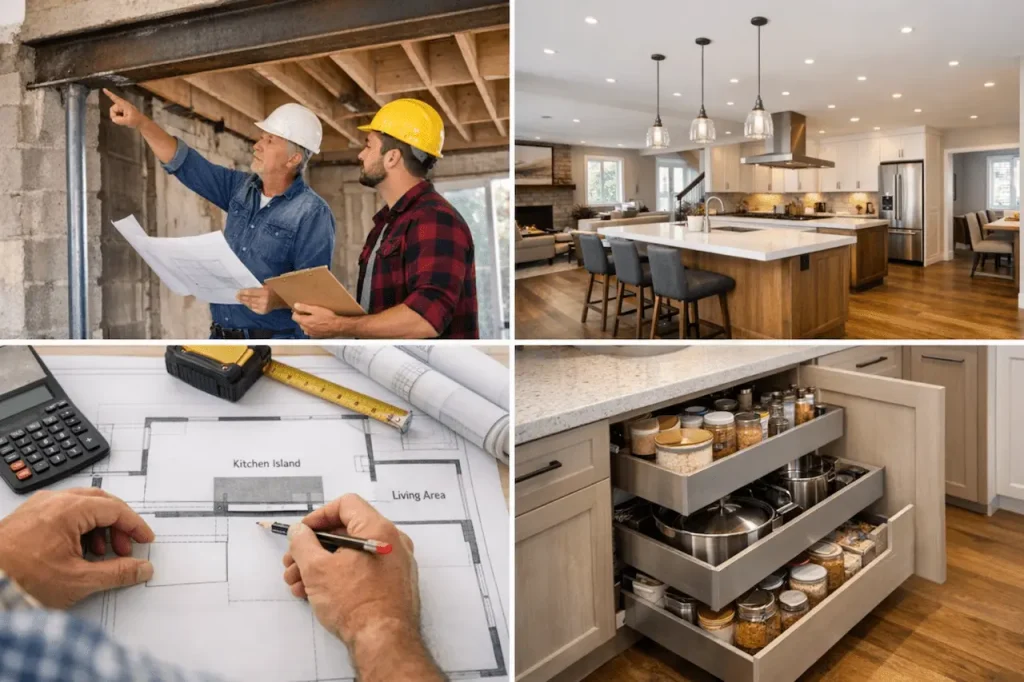
Lighting planning is often underestimated during kitchen remodel planning. In an open layout, lighting must define zones without physical walls.
I layer lighting in three levels:
Ambient lighting for overall brightness
Task lighting for countertops and island
Accent lighting for visual interest
Recessed lighting placement must align with cabinet layout and island positioning. Pendant lights over the island should scale proportionally to ceiling height and island width. I also consider dimmer controls to transition the space from functional to social use.
Maintain Flooring Continuity
One of the defining characteristics of an open concept kitchen remodel is visual continuity. I strongly recommend consistent flooring throughout connected spaces whenever possible.
Mixing flooring types can break visual flow and reduce perceived space. When transitions are unavoidable, I use subtle threshold details to maintain cohesion.
Flooring selection must also consider:
• Durability in high traffic zones
• Moisture resistance
• Ease of maintenance
A seamless floor enhances the sense of openness and improves long term usability.
Rework Storage Strategy for Open Spaces
When upper walls are removed, upper cabinets often decrease. This requires smarter storage planning.
I compensate by incorporating:
• Taller base cabinets
• Deep drawer systems
• Built in pantry units
• Island storage on both sides
Open shelving can work, but I use it strategically. Too much open shelving creates visual clutter in an open floor plan. Closed storage maintains a clean and professional appearance.
Address Ventilation and Noise Control
In a closed kitchen, odors and noise remain contained. In an open layout, they travel throughout the home.
I always upgrade ventilation systems during an open concept kitchen remodel. A high capacity range hood with proper duct routing is essential.
Noise management is equally important. I recommend:
• Quiet dishwasher models
• Insulated plumbing
• Soft close cabinetry
These details preserve comfort in adjacent living areas.
Budget Planning With Structural Realities in Mind

Cost planning for an open layout must account for structural adjustments. Removing a wall is not simply demolition. It involves engineering, inspection, finishing, and sometimes foundation reinforcement.
Typical cost drivers include:
• Beam installation
• Electrical panel upgrades
• HVAC relocation
• Drywall refinishing
• Flooring integration
I guide clients to plan contingency funds because structural surprises can occur once walls are opened. Transparent budgeting builds trust and prevents project stress.
Permit and Code Compliance
Every structural modification requires proper permits. I never proceed without ensuring compliance with local building regulations.
Permit approval protects the homeowner in three ways:
• Legal compliance
• Inspection validation
• Future resale security
Unpermitted structural changes create major problems during property sales and insurance claims. Professional planning avoids these risks entirely.
Align the Design With Daily Lifestyle
An open layout must serve daily routines. Before finalizing the design, I evaluate how the homeowner uses the space.
Questions I always address:
Do they entertain frequently
Is the kitchen used heavily for cooking
Are children using the island for homework
Is noise separation important
This step transforms a generic open kitchen design into a personalized functional environment.
Manage Timeline Expectations
An open concept kitchen remodel involves multiple phases. Structural adjustments often extend the project timeline.
The sequence typically includes:
• Engineering assessment
• Permit approval
• Demolition
• Structural beam installation
• Mechanical relocation
• Cabinet installation
• Finishing work
Clear scheduling prevents unrealistic expectations. I always communicate realistic timelines before starting work.
Conclusion
Planning an open concept kitchen remodel requires more than removing a wall and updating finishes. I approach every project with structural clarity, functional zoning, and long term performance in mind. When layout, engineering, lighting, and storage are aligned properly, the result is a seamless space that supports daily living and enhances property value. A disciplined planning process is what transforms an idea into a structurally sound and highly functional open environment.
Why Choose Us
At Capital Kitchen and Bath, I focus on precision planning, structural integrity, and practical design execution in every project we handle across our service areas.
• Structured planning process from engineering review to final installation
• Clear budgeting and permit compliance management
• Functional layouts designed for real daily use
• Coordinated lighting, storage, and ventilation strategy
• Professional project management with defined timelines
Frequently Asked Questions
How much planning is required before starting an open concept kitchen remodel
Detailed planning is essential because structural review, layout development, budgeting, and permit approval must all be completed before demolition begins.
Can I remove a kitchen wall without hiring a professional
Structural evaluation and beam calculations require professional expertise to ensure safety and code compliance.
Does opening the kitchen increase overall renovation costs
Structural adjustments, electrical relocation, and flooring integration can increase costs, but they also significantly improve functionality and resale appeal.
How do I ensure proper airflow in an open kitchen layout
Upgrading to a high performance ventilation system with proper duct routing ensures odors and heat do not spread throughout the connected living areas.
What is the most common mistake in planning this type of remodel
The most common mistake is prioritizing appearance over structural planning and traffic flow, which leads to long term usability problems.