
When I evaluate a basement for finishing, the first factor I address is moisture control. Basements are below grade structures, which means they are constantly exposed to soil pressure, humidity, and potential water intrusion. Choosing the wrong basement wall materials can lead to mold growth, structural deterioration, and costly remediation within a few years. I approach material selection with a clear understanding of vapor movement, insulation behavior, and long term durability. Moisture resistance is not an optional upgrade in a basement environment. It is a structural necessity that protects both the investment and the indoor air quality of the home.
Understand the Moisture Conditions of the Basement
Before selecting any materials, I assess the existing moisture profile of the space. Every basement behaves differently depending on foundation type, drainage quality, and climate conditions.
I inspect:
• Signs of water seepage along foundation walls
• Efflorescence on concrete surfaces
• Existing cracks in the foundation
• Relative humidity levels
Concrete walls naturally allow vapor transmission. Even if visible water is not present, moisture can migrate through the foundation. That is why selecting appropriate basement wall materials must begin with understanding the environment rather than aesthetics.
Avoid Traditional Drywall Directly on Concrete
Standard drywall is not designed for below grade installation without protection. When drywall comes into contact with damp concrete, it absorbs moisture and becomes a breeding ground for mold.
I never recommend attaching drywall directly to foundation walls. Instead, I create a separation system that includes:
• A moisture barrier
• Proper insulation
• Framed wall spacing
This layered approach prevents condensation buildup and protects finished surfaces from hidden damage.
Use Rigid Foam Insulation as a Moisture Barrier
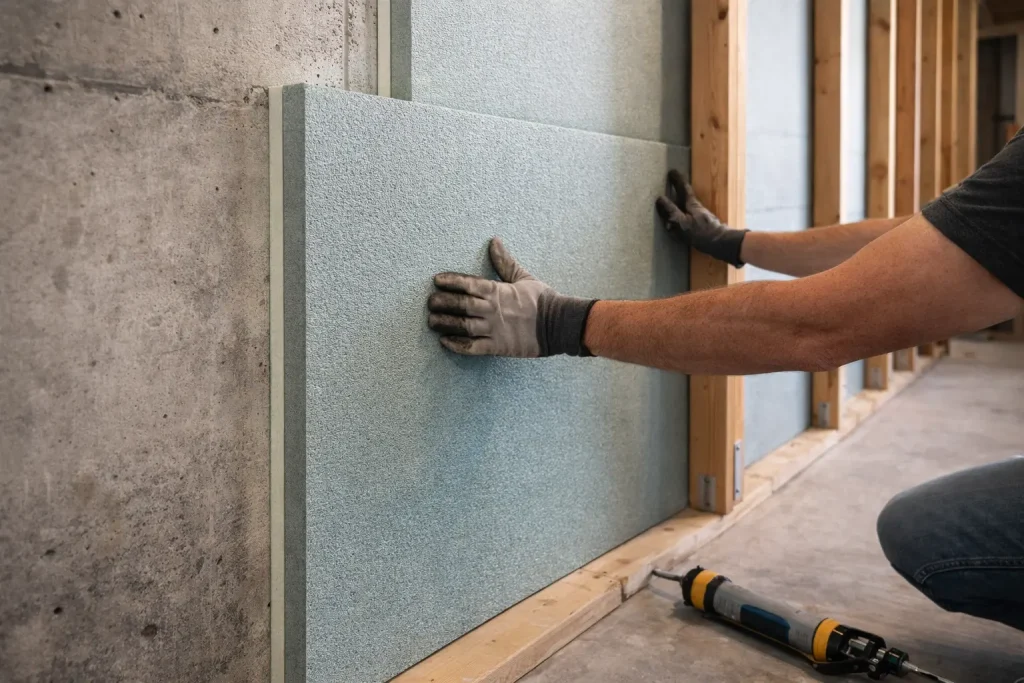
Rigid foam board is one of the most reliable components I use when selecting basement wall materials. It acts as both insulation and a vapor control layer.
Benefits of rigid foam include:
• Low moisture absorption
• Thermal resistance
• Mold resistance
• Structural durability
By installing foam board directly against concrete, I reduce thermal bridging and condensation risk. It creates a stable surface for framing and finishing materials.
Incorporate a Proper Vapor Management Strategy
Many homeowners misunderstand vapor barriers. Installing plastic sheeting without understanding dew point movement can trap moisture inside wall cavities.
My strategy focuses on controlled vapor management rather than sealing the wall completely. This includes:
• Using moisture resistant insulation
• Allowing interior surfaces to dry properly
• Avoiding double vapor barriers
Proper airflow and balanced insulation reduce long term humidity buildup.
Consider Mold Resistant Wall Panels
In high humidity regions, I often recommend specialized wall panel systems designed for basements. These systems are engineered to resist mold growth and manage air circulation behind finished surfaces.
Advantages include:
• Integrated insulation
• Built in drainage spacing
• Moisture resistant core materials
• Simplified installation process
While they may have higher upfront cost than traditional framing, they provide long term reliability in moisture prone environments.
Frame Walls with Moisture Spacing
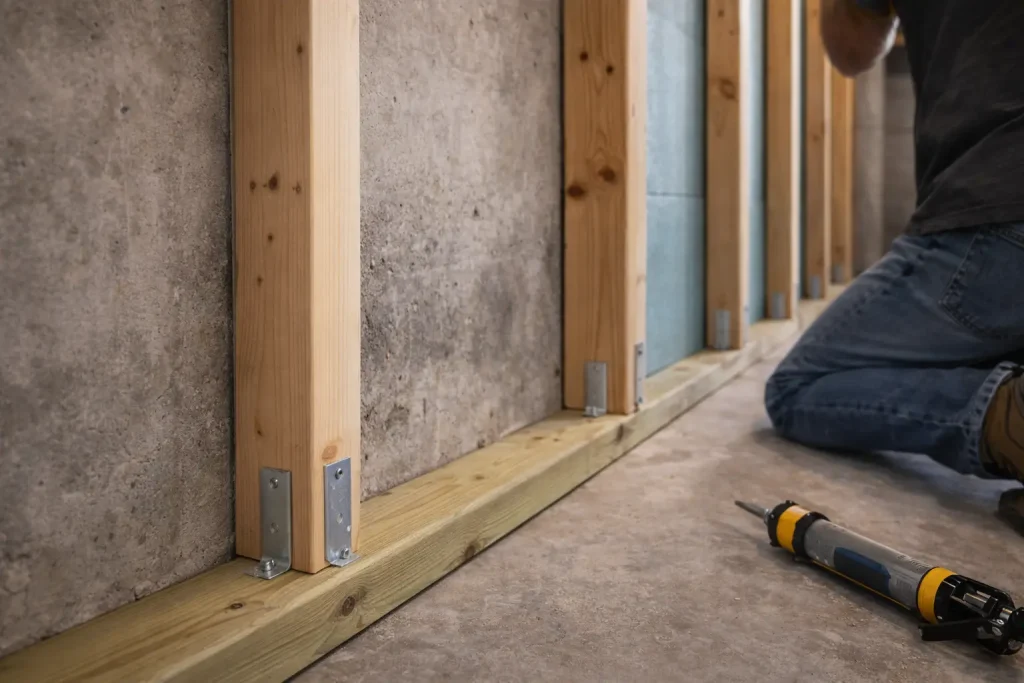
When building framed walls in a basement, I avoid placing wood studs directly against concrete. Instead, I maintain a small gap to allow air circulation and prevent moisture transfer.
Pressure treated bottom plates are essential in basement framing. This reduces the risk of rot if minor moisture contact occurs.
Proper spacing improves the performance of basement wall materials and extends the lifespan of finished surfaces.
Address Foundation Sealing Before Finishing
No wall system can compensate for active water intrusion. Before finishing, I confirm that foundation sealing and drainage systems are functioning correctly.
This may involve:
• Exterior grading correction
• Downspout extension
• Crack injection repair
• Interior waterproof coatings
Material selection must follow structural waterproofing, not replace it.
Choose Insulation Based on Climate Conditions
Climate plays a significant role in determining the right insulation approach. In colder climates, condensation risk increases when warm interior air meets cold foundation walls.
Rigid foam with closed cell properties performs well because it limits vapor transmission. Fiberglass insulation alone is not ideal unless protected by a vapor control layer.
Selecting insulation without climate consideration leads to hidden moisture accumulation inside wall cavities.
Evaluate Long Term Durability Over Initial Cost
Budget considerations are important, but selecting basement wall materials based solely on cost often leads to premature failure.
Lower cost materials may:
• Absorb moisture easily
• Support mold growth
• Warp or deteriorate
• Require replacement within a few years
Investing in moisture resistant systems reduces future renovation costs and protects indoor air quality.
Control Humidity After Installation
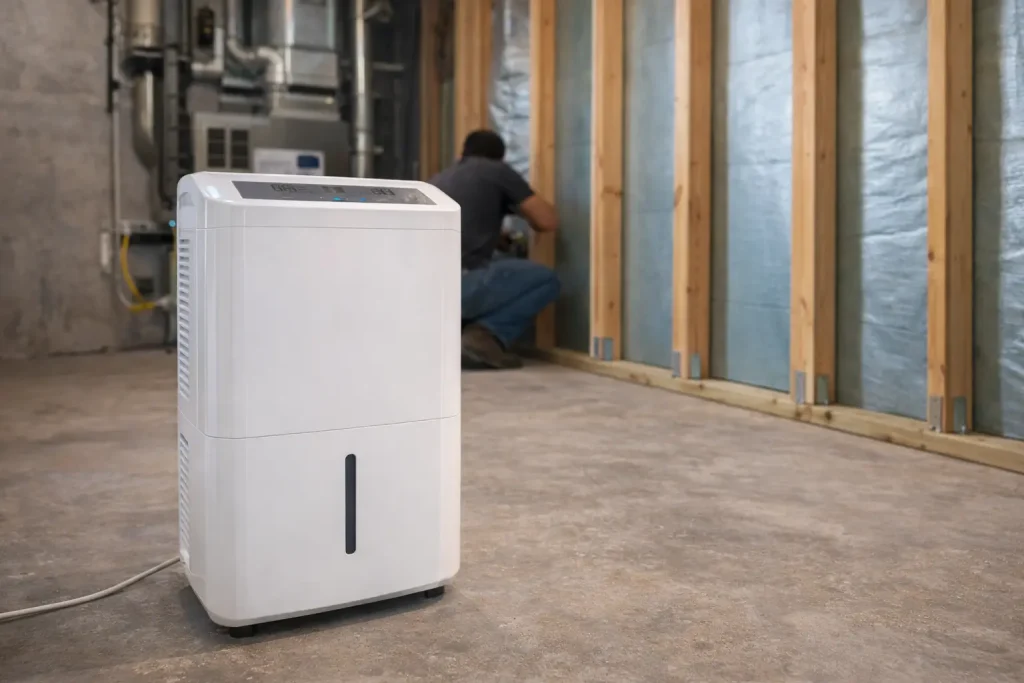
Even with proper wall systems, humidity management remains critical. Basements naturally retain moisture due to limited ventilation.
I recommend:
• Installing a dehumidifier system
• Maintaining humidity below 50 percent
• Ensuring proper HVAC air circulation
Material performance depends on environmental control. Moisture resistant materials are part of the solution, not the entire system.
Avoid Common Basement Finishing Mistakes
One of the most common mistakes I see is finishing a basement without testing moisture levels first. Another is installing wood paneling directly against concrete.
I advise homeowners to avoid:
• Carpet directly on concrete without subfloor systems
• Untreated wood framing in contact with foundation
• Non rated drywall products
• Blocking airflow behind wall assemblies
Careful material selection combined with structural awareness prevents long term problems.
Planning for a Safe and Durable Basement Finish
Choosing the correct basement wall materials requires more than product comparison. It requires understanding how moisture behaves in below grade structures.
When I design basement wall systems, I focus on:
• Separation between concrete and finished surfaces
• Controlled vapor movement
• Mold resistant components
• Long term durability
This approach ensures that finished basements remain safe, dry, and structurally sound for years.
Conclusion
Selecting the right basement wall materials is not about appearance alone. It requires understanding moisture behavior, vapor control, insulation performance, and long term durability. I approach every basement project with a structured system that separates finished surfaces from foundation walls and manages humidity effectively. When materials are chosen strategically and installed correctly, the basement becomes a stable and healthy extension of the home. Proper planning prevents mold issues, structural deterioration, and future renovation costs.
Why Choose Us
At Capital Kitchen and Bath, I design basement wall systems with moisture control and structural integrity as the priority.
• Detailed moisture assessment before material selection
• Proven vapor management and insulation strategies
• Mold resistant wall system recommendations
• Foundation sealing coordination before finishing
• Structured installation process for long term durability
Frequently Asked Questions
What is the safest material to use on basement walls
Rigid foam insulation combined with framed walls and moisture resistant drywall provides reliable protection against condensation and mold growth.
Can drywall be used in a basement
Drywall can be used if it is installed over a proper moisture barrier and insulation system, not directly against concrete.
Do I need a vapor barrier in my basement walls
Vapor management is necessary, but the approach depends on climate and wall system design to prevent trapped moisture.
How do I prevent mold on basement walls
Controlling humidity, sealing foundation cracks, and using moisture resistant materials are essential for mold prevention.
Is finishing a basement without waterproofing risky
Yes, finishing without addressing drainage and foundation sealing can lead to hidden water damage and long term structural issues.