
I have seen firsthand that flooring projects become more complicated when cabinets, kitchen islands, or appliances are already installed in the space. When flooring must be installed around these fixed elements, the installer must work carefully to maintain alignment and avoid visible gaps.
When I guide homeowners through renovation planning, I always explain that successful flooring installation around fixtures depends on accurate measurements, careful layout planning, and precise cutting techniques. At Capital Kitchen and Bath, we focus on installation methods that allow flooring to fit naturally around fixtures while maintaining a clean and balanced appearance.
Why Flooring Installation Around Fixtures Requires Careful Planning
Installing flooring in an empty room is usually straightforward, but the process becomes more complex when permanent fixtures are already in place. Cabinets, islands, and plumbing fixtures create obstacles that must be considered before installation begins.
I always prioritize planning because the flooring layout must work around these elements while maintaining a consistent pattern across the room. Without proper preparation, installers may encounter uneven seams or awkward cuts that affect the final result.
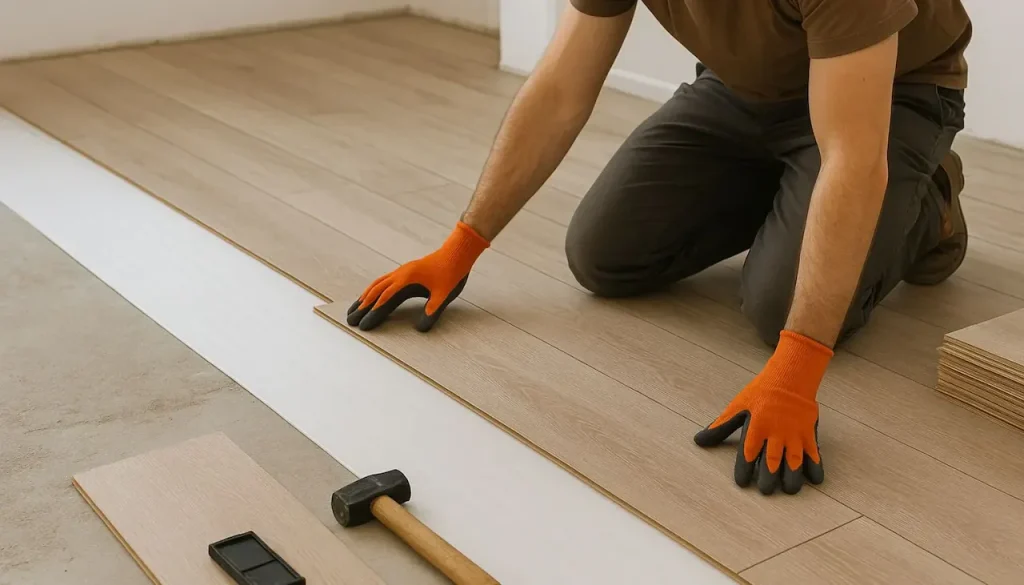
A well planned layout ensures that flooring installation around fixtures fits precisely around existing structures while preserving the visual balance of the floor design.
Common Challenges When Installing Flooring Around Fixtures
Many flooring problems occur because installers begin placing boards or tiles without evaluating the full room layout. I have seen projects where the flooring was installed from one side of the room without considering how the pattern would align with islands, cabinets, or appliances.
Several challenges often appear during flooring installation.
• Inaccurate measurements around cabinets and fixed objects
• Difficult cuts required near plumbing fixtures or appliances
• Uneven gaps between flooring and surrounding structures
• Flooring patterns that become misaligned across the room
• Limited space when working near large fixtures
Recognizing these challenges early helps prevent mistakes and improves the overall flooring installation result.
Planning the Flooring Layout Before Installation
Careful layout planning is essential before installing any flooring material. I always begin by measuring the entire room and identifying the position of permanent fixtures such as cabinets, islands, and appliances.
When the layout is planned correctly, the flooring pattern flows naturally across the room and fits smoothly around fixtures.
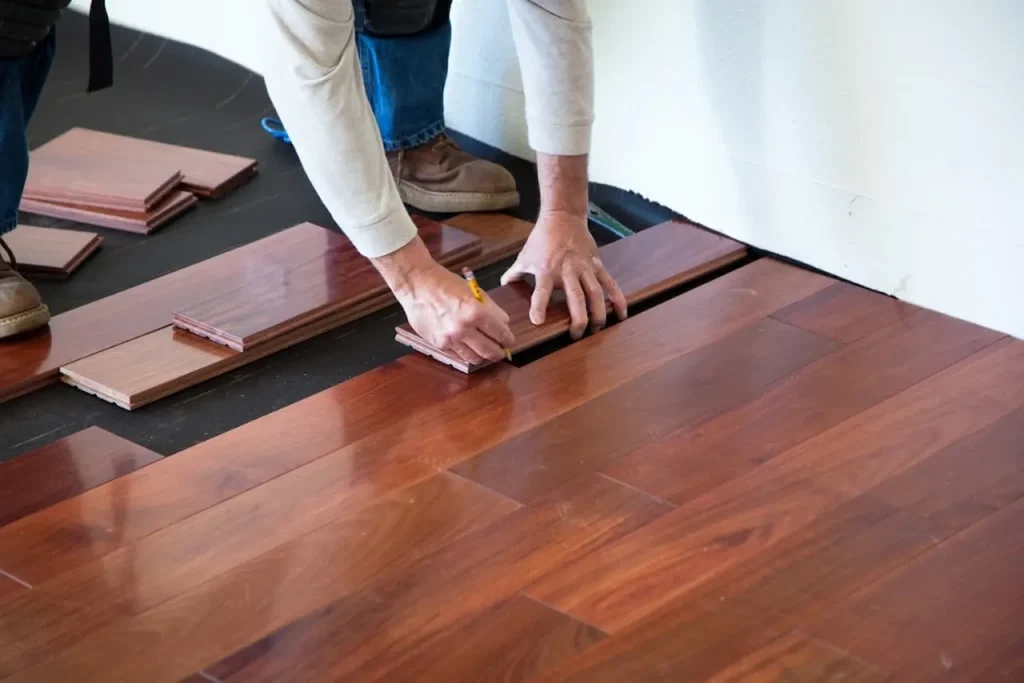
Without this planning stage, installers often discover alignment problems only after much of the flooring has already been installed. At that point, correcting the pattern becomes difficult.
Measuring Around Fixtures Accurately
Accurate measurements ensure that flooring pieces fit correctly around fixed objects. I typically begin by locating the center of the room and determining how the flooring boards or tiles will align with surrounding elements.
Several preparation steps help maintain proper alignment.
• Measure the full room including fixture locations
• Mark reference lines to guide flooring alignment
• Identify areas where boards or tiles must be trimmed
• Confirm spacing between flooring and surrounding walls
• Adjust the layout to avoid extremely narrow flooring pieces
These steps create a balanced flooring layout and support smooth flooring installation around fixtures.
Preparing the Subfloor Before Installing Flooring
Even the highest quality flooring material will not perform well if the subfloor beneath it is uneven. I have seen many cases where flooring boards shifted or separated because the subfloor was not properly prepared.
Before installation begins, the surface must be cleaned, leveled, and inspected for damage. This preparation helps ensure the flooring remains stable after installation.
A properly prepared subfloor also improves the durability of the flooring and prevents long term alignment issues near fixtures.
Establishing a Straight Starting Line
One of the most important steps in flooring installation is establishing a straight starting line. I always mark a reference line before placing the first row of boards or tiles.
If the first row is not perfectly straight, every row that follows will gradually shift out of alignment. This problem becomes especially noticeable when the flooring reaches cabinets or islands.
Maintaining a straight starting line ensures the entire installation remains balanced across the room.
Cutting Flooring to Fit Around Fixtures
Precise cutting is often required when installing flooring near fixed structures. Cabinets, pipes, and appliances frequently require boards or tiles to be trimmed so they fit properly.
Without accurate cutting, gaps can appear between the flooring and the surrounding fixtures. These gaps can reduce the professional appearance of the finished floor.
Best Practices for Accurate Flooring Cuts
Using proper tools and techniques makes it easier to create precise cuts around obstacles.
Several methods improve cutting accuracy.
• Use high quality cutting tools designed for the flooring material
• Measure each piece carefully before cutting
• Test fit the flooring piece before final placement
• Trim slowly to prevent edge damage
• Maintain consistent spacing around fixtures
These practices help ensure that flooring installation around fixtures fits tightly and looks professionally completed.
Maintaining Consistent Expansion Gaps
Expansion gaps are an important part of many flooring systems, especially hardwood and laminate flooring. These small spaces allow the material to expand and contract as temperature and humidity levels change.
I always explain to homeowners that expansion gaps prevent flooring from buckling or shifting over time. These spaces are usually placed along walls and near fixed structures.
When expansion gaps are planned correctly, the flooring can adjust naturally without damaging the surrounding fixtures.
Finishing Flooring Edges Around Fixtures
After the flooring has been installed, the edges near fixtures must be finished carefully. Even when the boards fit tightly, finishing materials help create a clean transition between the floor and the surrounding structures.
Several finishing techniques improve the final appearance.
• Trim pieces that cover exposed flooring edges
• Transition strips between flooring surfaces
• Flexible sealant around plumbing fixtures
• Edge molding near cabinets or islands
• Decorative trim that matches surrounding materials
These finishing details help create a smooth connection between the flooring and the surrounding fixtures.
How Professional Installation Improves Flooring Results
Flooring installation around fixtures requires careful planning and experienced workmanship. I have seen firsthand how professional installers approach the project by evaluating the entire layout before beginning installation.

Experienced professionals understand how to align flooring patterns with cabinets, appliances, and structural features. This preparation helps prevent alignment problems and ensures the flooring fits smoothly around obstacles.
At Capital Kitchen and Bath, we approach every flooring project with detailed preparation and precise measurements. By focusing on layout planning, accurate cutting, and careful finishing techniques, we help homeowners achieve reliable and attractive flooring installation around fixtures.
Conclusion
Handling flooring installation around existing fixtures requires careful planning, accurate measurements, and precise cutting techniques. I have seen firsthand that when a flooring project begins with a well organized layout plan, it becomes much easier to maintain alignment and avoid gaps near cabinets, appliances, and other structures.
Focusing on proper subfloor preparation, accurate cuts, and consistent spacing helps create a durable and visually balanced floor. With the right approach, flooring installation around fixtures can deliver a clean and professional result that enhances the entire space.
Why Choose Capital Kitchen and Bath
At Capital Kitchen and Bath, we approach flooring and renovation projects with careful planning and professional installation methods.
• We provide expert guidance for flooring installation during renovation projects
• Our team focuses on accurate measurements and layout planning
• We design flooring solutions that align smoothly around existing fixtures
• Our installation process prioritizes durability and clean finishing
• We support homeowners with professional kitchen and bathroom remodeling expertise
Frequently Asked Questions
How do you install flooring around existing fixtures
Installers measure carefully around cabinets, appliances, and plumbing fixtures before cutting flooring boards or tiles so they fit tightly without visible gaps.
Should flooring be installed under cabinets
In most renovation projects cabinets are installed first and the flooring is fitted carefully around them.
What tools are used to cut flooring around fixtures
Professionals typically use saws designed for the flooring material along with measuring tools to create precise cuts.
Why are expansion gaps important in flooring installation
Expansion gaps allow flooring materials to expand and contract with temperature and humidity changes without causing damage.
Can gaps around fixtures be fixed after flooring installation
Small gaps can sometimes be covered with trim or molding, but larger gaps usually require correcting the flooring installation.